
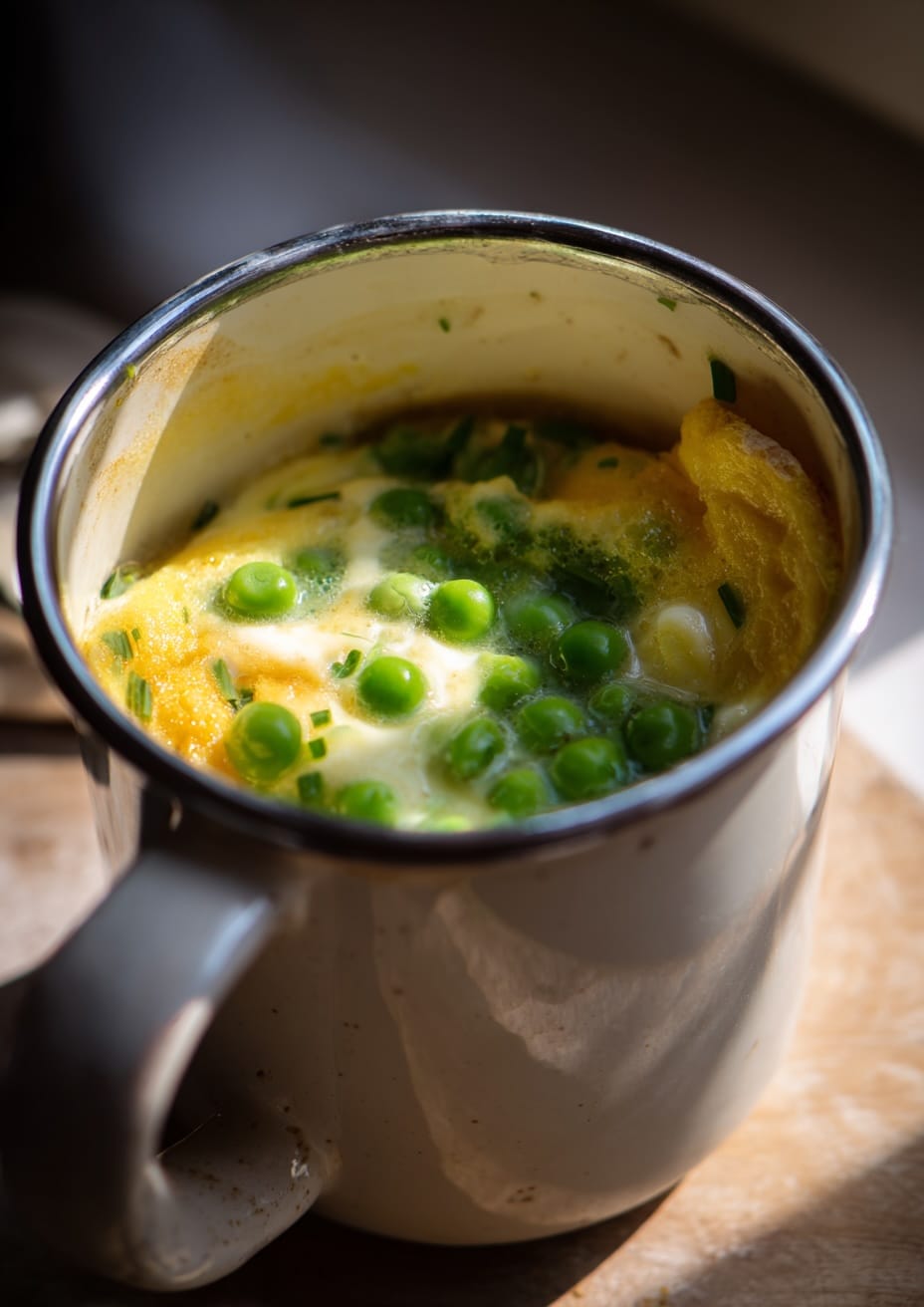
When cooking feels like one task too many
This microwave mug omelette is what I make when I want protein now, not in forty minutes, and I cannot face washing up a frying pan. It’s warm, fluffy and oddly cheering, the kind of food that makes you feel a bit more put together even if your hair says otherwise.
I keep it in my low-effort healthy dinner collection because it’s proper food with almost no ceremony. You can eat it straight from the mug, which feels slightly feral but also quite efficient.
Eggs in the microwave, yes really
Microwaves get a bad reputation, mostly because people blast things until they’re rubbery then blame the appliance. Eggs need short bursts and a quick stir, that’s it. Treat them gently and you get a soft set, not something you could bounce off the wall.
If you want another egg-based dinner with more sauce and a bit more time, tomatoey chickpea shakshuka with runny eggs is the cosy cousin.
Feta, peas and chives, small ingredients, big comfort
Feta gives salty creaminess, peas add sweetness and little pops of texture, and chives make it taste fresher without making you chop half the fridge. I always keep frozen peas on standby, they’re the weeknight ingredient that never complains.
On nights when I want dinner to feel light but still satisfying, I’ll switch to miso salmon traybake for zero-stress dinners and let the oven take the strain.
The mug method that actually works
The key is not overfilling and not overcooking. Eggs expand, steam builds, and a mug omelette can go from perfect to puffy and dry in about 30 seconds. I’ve learned to stop early, stir, then finish in small bursts.
If you’re after another fast meal with a bit more crunch and chew, 15-minute soba noodles with crispy tofu is a good shout, and for cold lunches that feel organised, tuna and cannellini salad jars for desk lunches are my practical favourite.
Ingredients (serves 4)
You’ll make 4 mugs, one per person
- 8 large eggs
- 4 tbsp milk (about 60 ml), dairy or unsweetened soya
- 160 g frozen peas
- 120 g feta, crumbled
- 10 g fresh chives, finely snipped
- ½ tsp fine salt
- Black pepper
- 4 tsp olive oil or butter, for greasing the mugs
Optional extras
- 80 g baby spinach, chopped
- 1 tsp Dijon mustard
- 1 pinch chilli flakes
Ingredient notes
Use large eggs, they give the right volume so each mug feels like a meal. If your eggs are smaller, add one extra egg across the batch and reduce the milk slightly so it stays fluffy rather than watery.
Frozen peas can go in straight from frozen. They heat through quickly and cool the mixture slightly, which helps prevent the eggs overcooking in the first blast. If you’re using spinach, chop it so it doesn’t sit in long strings and hijack every bite.
Equipment
You’ll need 4 microwave-safe mugs, ideally 300 to 400 ml. Wide mugs cook more evenly than tall skinny ones, because microwaves do better with a shallow layer of egg.
A fork and a small bowl are plenty. I whisk the eggs in a bowl first because it’s quicker to mix evenly, then pour into mugs. If you try to whisk in the mug, you’ll miss pockets of egg white and end up with weirdly patchy texture.
Instructions
Step 1: Prep the mugs
Grease 4 microwave-safe mugs with olive oil or butter, coating the base and sides. This helps the omelette slide out, or at least not glue itself on.
Step 2: Mix the egg base
In a large bowl, whisk together the eggs, milk, salt and black pepper. Add Dijon mustard and chilli flakes if using, then whisk again.
Stir in peas, most of the feta and most of the chives, saving a little of each for the top.
Step 3: Fill and microwave in short bursts
Pour the mixture evenly into the mugs, filling each mug no more than two-thirds full. Add a pinch of feta and chives on top.
Microwave one mug at a time on HIGH:
- 45 seconds, then stir briskly with a fork
- 30 seconds, stir again
- 15 to 30 seconds more, until just set with a slight wobble
Repeat for the remaining mugs. Cooking time varies by microwave, and also by mug shape, so treat this like a flexible plan, not a contract.
Step 4: Rest, then serve
Let each mug stand for 1 minute. The egg finishes setting in the residual heat and stays softer.
Technique Notes
Microwave eggs are all about stopping early. If you cook until it looks fully set in the microwave, it will be overdone after the 1-minute rest. I aim for “barely set and glossy”, then let time do the last bit.
Stirring is non-negotiable. The edges cook first, the middle lags behind, and a quick stir evens everything out. Think of it like making soft scrambled eggs, just in a mug with fewer feelings involved.
Serving Suggestions
I like these with buttered wholemeal toast and a pile of chopped tomatoes with a pinch of salt. It’s simple, but the salty feta and sweet peas make it taste like more than the sum of its parts.
If you’re eating this as a quick lunch, add a side of cucumber sticks, olives and a squeeze of lemon over the top. The lemon does a lot of work, it makes the omelette taste brighter and less “eggy” in that heavy way.
Wine and Beer Pairings
For wine, a crisp Picpoul de Pinet or another bright, citrusy white works well because it cuts through the feta’s salt and keeps the peas tasting sweet. If you prefer something slightly softer, a dry Pinot Grigio is a calm match, light enough for eggs, fresh enough for chives.
For beer, a clean lager is ideal, it refreshes the palate and does not fight the dairy notes. If you want a little more flavour, a pale ale with gentle citrus hops is lovely, especially if you’ve added chilli flakes, it lifts the heat without making the pairing feel heavy.
Frequently asked questions
How long should a microwave mug omelette cook for?
Usually 90 seconds to 2 minutes per mug, but do it in bursts and stir. Mug size and microwave power change everything.
Can I make mug omelettes for four at once?
You can, but single-mug cooking is more reliable. Multiple mugs at once often cook unevenly, one turns dry while another is still liquid.
Why did my mug omelette turn rubbery?
It cooked too long. Stop while it still has a slight wobble, then let it rest for a minute.
Can I use fresh peas instead of frozen?
Yes, but blanch them first or they can stay a bit firm. Frozen peas are the easier route and they’re sweet.
Is this microwave omelette good for meal prep?
It’s best freshly cooked, but you can prep the mix in the fridge and cook it when you’re ready. That keeps the texture much nicer than reheating.
Tips for Success: microwave mug omelette
For the fluffiest microwave mug omelette, whisk the eggs until the mixture looks uniform and slightly frothy. That little bit of air makes a difference, and it also helps the feta and chives distribute evenly so each bite tastes balanced.
Cook one mug as your tester. If it needs longer, you’ll know what to do for the rest. If it’s already firm, shorten the time for the next mugs. This tiny bit of calibration saves you from four identical rubbery outcomes, which is not the sort of group project I enjoy.
Variations
Swap the feta for grated cheddar or a little goat’s cheese if that’s what you’ve got. Cheddar melts more, so the omelette will feel richer, while goat’s cheese gives a tangier finish. Reduce salt slightly if your cheese is salty.
For extra veg, add finely diced peppers, spring onions or leftover roasted veg, chopped small. Keep additions modest so the eggs still set properly. If you add lots of watery veg like tomatoes, scoop out the seeds first or the omelette can go a bit wet.
Storage and Reheating: microwave mug omelette
Microwave mug omelette is best eaten immediately, but leftovers can be stored. Cool, tip out of the mug, then refrigerate in an airtight container for up to 2 days.
Reheat gently in the microwave at medium power in 20-second bursts until hot. It will firm up a little, that’s normal. If you can, I’d rather prep the mix ahead and cook fresh, it tastes noticeably better.
Nutrition Information
Eggs provide high-quality protein that keeps you full, plus choline which supports normal brain function, handy when you’re running on low sleep. Peas add fibre and a bit of sweetness, while feta brings calcium and flavour so you don’t feel like you’re eating “health food”.
For a lower saturated fat option, use reduced-fat feta and skimmed milk, or replace half the feta with chopped herbs and a squeeze of lemon. For lower sodium, choose a lighter-salt feta, reduce added salt to a pinch and lean on black pepper and chives for punch. For dairy-free, use unsweetened soya milk and swap feta for a dairy-free white-style alternative, then add extra chives and a small squeeze of lemon to perk it up.

Microwave Mug Omelette with Feta Peas and Chives

Ingredients
- 8 eggs large
- 4 tbsp milk about 60 ml, dairy or unsweetened soya
- 160 g frozen peas
- 120 g feta crumbled
- 10 g fresh chives finely snipped
- ½ tsp fine salt
- Black pepper
- 4 tsp olive oil or butter, for greasing the mugs
Optional extras
- 80 g baby spinach chopped
- 1 tsp Dijon mustard
- 1 pinch chilli flakes
Instructions
Prep the mugs
- Grease 4 microwave-safe mugs with olive oil or butter, coating the base and sides. This helps the omelette slide out, or at least not glue itself on.
Mix the egg base
- In a large bowl, whisk together the eggs, milk, salt and black pepper. Add Dijon mustard and chilli flakes if using, then whisk again.
- Stir in peas, most of the feta and most of the chives, saving a little of each for the top.
Fill and microwave in short bursts
- Pour the mixture evenly into the mugs, filling each mug no more than two-thirds full. Add a pinch of feta and chives on top.
- Microwave one mug at a time on HIGH:
- 45 seconds, then stir briskly with a fork
- 30 seconds, stir again
- 15 to 30 seconds more, until just set with a slight wobble
- Repeat for the remaining mugs. Cooking time varies by microwave, and also by mug shape, so treat this like a flexible plan, not a contract.
Rest, then serve
- Let each mug stand for 1 minute. The egg finishes setting in the residual heat and stays softer.