
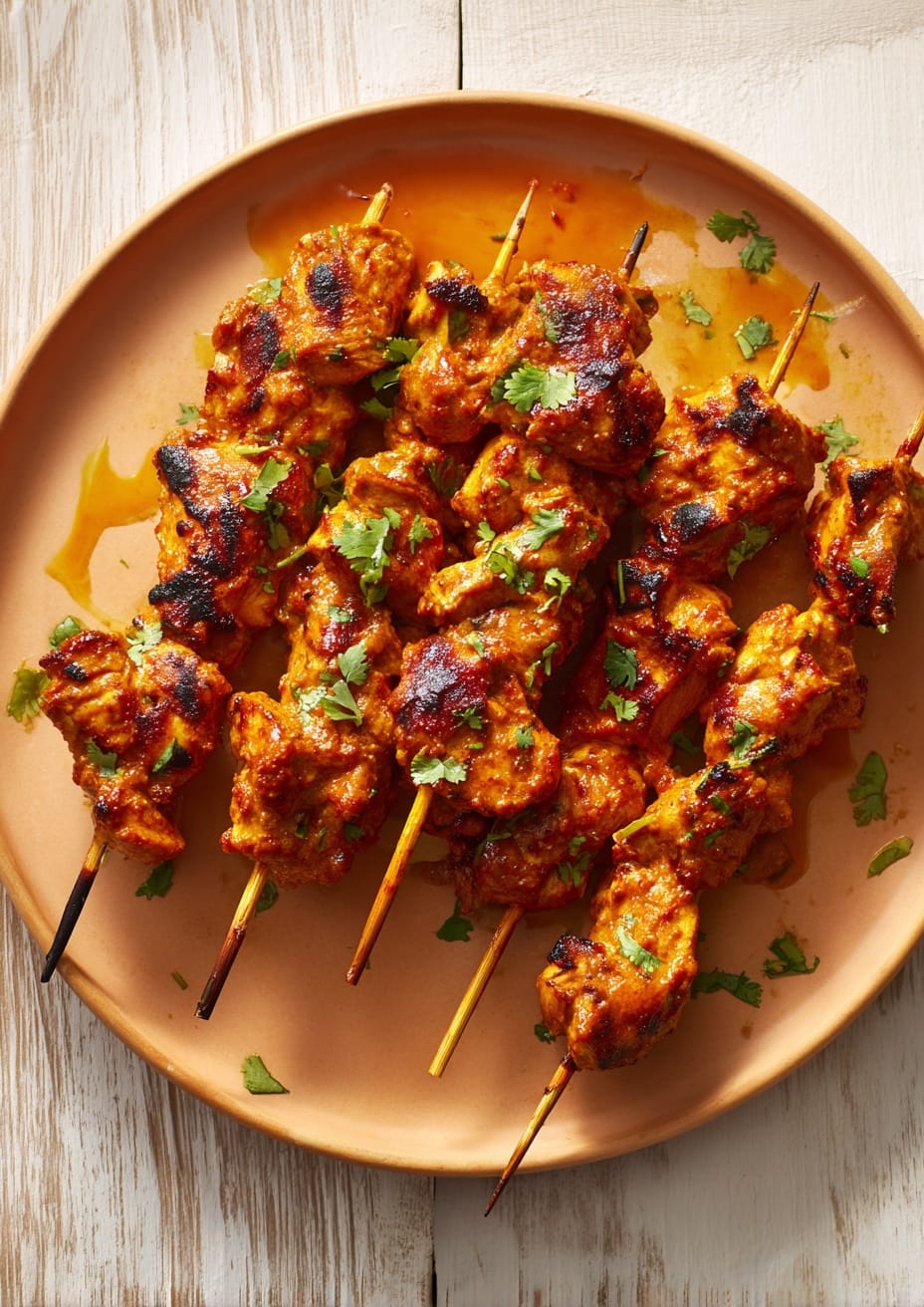
Creamy heat that stays friendly
Thai red curry paste is my cheat code for big flavour with very little faff. It brings chilli warmth, garlic, a bit of sweetness and that fragrant background note that makes the kitchen smell like dinner is properly underway.
Coconut turns sauce into glaze
Coconut milk does something clever here, it softens the heat, adds richness and helps the glaze cling. When it hits a hot grill, it turns glossy and lightly caramelised, like a savoury varnish you actually want on your food.
A skewer that suits a mixed plate
These skewers are brilliant when you want variety, because they sit somewhere between spicy and creamy. If you are plotting a full spread, my spicy BBQ skewer round-up for weeknight cooks helps you pick contrasting flavours without staring into the fridge like it has answers.
My favourite contrasts on the same table
When I make these, I often add one sharper skewer and one smokier skewer for balance. Chipotle lime skewers with smoky kick bring that toasted chilli edge, and tandoori yoghurt skewers with warm spice give you tender, creamy spice in a different direction.
Ingredients (serves 4)
- 700 g chicken thighs, boneless and skinless, cut into 3 cm chunks
- 10 metal skewers, or 10 soaked wooden skewers
- Neutral oil, for the grill grates
Thai red curry coconut marinade and glaze
- 70 g Thai red curry paste
- 200 ml coconut milk (full fat for best glaze)
- 25 ml lime juice
- Zest of 1 lime
- 20 ml light soy sauce
- 15 g light brown sugar
- 15 ml fish sauce (optional, see notes)
- 3 garlic cloves, finely grated
- 10 g grated fresh ginger
- 10 ml neutral oil
To finish
- 15 g fresh coriander, chopped
- 1 spring onion, finely sliced (optional)
- Lime wedges, for serving
Thai red curry pastes vary a lot in salt and heat. I always taste a tiny bit stirred into coconut milk before I commit, then tweak with a pinch more sugar for roundness or extra lime for lift. If your paste is very salty, ease back on the soy sauce.
Fish sauce adds depth rather than a fishy taste, but it is optional. If you skip it, add an extra 5 ml soy sauce and a pinch more lime zest, you will still get a rich, savoury glaze.
Equipment
A grill pan or barbecue is ideal because you get quick browning and those slightly charred edges that make the coconut glaze taste toasty. An oven grill works too, but watch closely because coconut milk can catch faster than you expect.
You will want a mixing bowl plus a small saucepan for thickening the glaze. A silicone brush helps with basting, though a spoon works if you are careful. Tongs are useful for turning skewers without scraping off the coating you worked hard for.
Instructions
Make the coconut curry mixture
- In a bowl, whisk together the red curry paste, coconut milk, lime juice, lime zest, soy sauce, brown sugar, fish sauce (if using), garlic, ginger and neutral oil.
- Spoon about one third into a small saucepan and set aside for glazing later.
Marinate the chicken
- Pat the chicken dry, then add it to the bowl with the remaining mixture.
- Mix until coated, cover and marinate for 30 minutes at room temperature, or up to 12 hours in the fridge.
- If chilled, bring it out for 20 minutes before cooking.
Thread the skewers
- Soak wooden skewers for 30 minutes if using.
- Thread chicken onto skewers, leaving small gaps between pieces so heat can reach the sides.
Thicken the glaze
- Put the reserved sauce over a medium heat and simmer for 6 to 8 minutes, stirring often.
- It should thicken slightly and look glossy. Take it off the heat.
Cook the skewers
- Heat a grill pan or barbecue to medium-high and lightly oil the grates.
- Cook the skewers for 10 to 14 minutes total, turning every 2 to 3 minutes.
- Brush with the thickened glaze for the last 3 to 4 minutes, turning and brushing in thin layers so it sets without catching.
- Rest for 2 minutes, then finish with coriander, spring onion and lime wedges.
Technique Notes
Coconut glaze likes a steady heat and a gentle hand with basting. Thin layers set better than one thick slather, and you get a cleaner, shinier finish with less risk of bitter, caught bits. Simmering the reserved sauce is worth it, it concentrates flavour and gives you a proper brush-on texture.
Turning often matters because curry paste contains sugars and aromatics that can scorch if left in one spot. I treat these like they are impatient, short bursts of heat on each side, then a turn, then glaze, then turn again until the surface looks lacquered and the chicken is cooked through.
Serving Suggestions
I love these with jasmine rice and something crisp, like cucumber ribbons dressed with lime and a pinch of salt. The rice catches any glaze that drips, and the cucumber keeps the whole plate feeling light on its feet.
If you are doing a mixed skewer line-up, add a sweet, sticky one and a fruity, cooling one. Honey sriracha skewers cooked under the grill give you glossy heat in a different register, and jerk pineapple skewers with cooling salsa bring sweetness and crunch that calms chilli nicely.
Wine and Beer Pairings
For wine, I like a chilled off-dry Riesling because a touch of sweetness takes the sting out of chilli and the acidity plays nicely with lime. If you prefer something less aromatic, go for a cold Pinot Grigio, it stays clean against coconut richness and does not fight the curry paste.
For beer, a crisp pilsner is a dependable match, the fizz cuts through the glaze and keeps each bite fresh. If you want more flavour, a wheat beer works well too, its soft, bready body smooths the heat and makes the aromatics taste rounder.
Frequently asked questions
Can I make Thai red curry chicken skewers less spicy?
Yes. Use 50 g curry paste instead of 70 g and add 20 ml extra coconut milk. Finish with more lime to keep it bright.
Is it safe to use leftover marinade as sauce?
Not unless you boil it. That is why I reserve some sauce before the raw chicken goes in, then simmer it for glazing.
Can I cook these skewers in the oven?
Yes. Grill on a rack over a tray under a hot oven grill for 12 to 16 minutes, turning halfway. Brush the glaze on for the final 3 to 4 minutes.
What can I use instead of fish sauce?
Add 5 ml extra soy sauce and a pinch of sugar, plus extra lime zest. You will still get a savoury finish.
Why is my coconut glaze splitting?
Heat was too high or it boiled too hard. Keep it at a gentle simmer and stir often, it should thicken without going grainy.
Can I use chicken breast?
You can. Cut slightly larger pieces, add 10 ml extra oil to the marinade and start checking a couple of minutes earlier to avoid dryness.
Tips for Success: Thai red curry BBQ chicken skewers
Keep the glaze separate from the raw chicken from the start. It makes everything simpler, safer and it gives you a thicker, shinier finish. I also brush in thin coats, letting each one set for a minute, rather than dumping it all on at once.
Let the chicken rest for two minutes after cooking, then squeeze lime over right at the table. The lime wakes up the coconut and curry paste, and it makes the whole skewer taste fresher without adding more salt.
Variations
For a nuttier version, stir 20 g peanut butter into the reserved glaze while it simmers, then loosen with a splash of water if needed. It turns silky and rich, and it clings beautifully to the chicken.
For a greener, sharper finish, stir 15 g chopped coriander stems into the marinade and add an extra 10 ml lime juice. The flavour shifts towards bright and herby, which is excellent if you are serving these with lots of crunchy salad.
Storage and Reheating: Thai red curry BBQ chicken skewers
Cool leftovers, then store in an airtight container in the fridge for up to 3 days. I slide the chicken off the skewers before storing so it reheats evenly and does not steam itself into softness.
Reheat in a hot frying pan with a small splash of water and a lid for 2 minutes, then uncover for 1 minute to bring back a little browning. Add fresh lime and coriander after reheating, it makes leftovers taste perky again.
Nutrition Information
These skewers are high in protein and satisfying, with coconut milk contributing richness and satiety. Lime, ginger and garlic add flavour so you can keep extra salt and sugary sauces in check.
For dietary alternatives, use tamari to keep it gluten-free and swap fish sauce for extra soy sauce or a vegan fish sauce alternative. If you want a lighter option, use reduced-fat coconut milk, the glaze will be less glossy but still tasty.
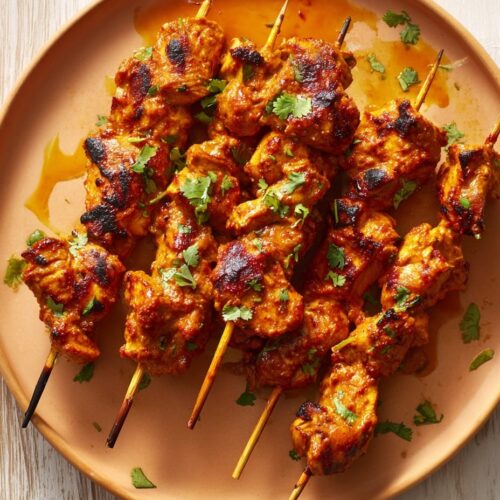
Thai Red Curry BBQ Chicken Skewers with Coconut Glaze

Ingredients
- 700 g chicken thighs boneless and skinless, cut into 3 cm chunks
- 10 metal skewers or 10 soaked wooden skewers
- Neutral oil for the grill grates
Thai red curry coconut marinade and glaze
- 70 g Thai red curry paste
- 200 ml coconut milk full fat for best glaze
- 25 ml lime juice
- Zest of 1 lime
- 20 ml light soy sauce
- 15 g brown sugar light
- 15 ml fish sauce optional, see notes
- 3 cloves garlic finely grated
- 10 g fresh ginger grated
- 10 ml neutral oil
To finish
- 15 g fresh coriander chopped
- 1 spring onion finely sliced (optional)
- Lime wedges for serving
Instructions
Make the coconut curry mixture
- In a bowl, whisk together the red curry paste, coconut milk, lime juice, lime zest, soy sauce, brown sugar, fish sauce (if using), garlic, ginger and neutral oil. Spoon about one third into a small saucepan and set aside for glazing later.
Marinate the chicken
- Pat the chicken dry, then add it to the bowl with the remaining mixture. Mix until coated, cover and marinate for 30 minutes at room temperature, or up to 12 hours in the fridge. If chilled, bring it out for 20 minutes before cooking.
Thread the skewers
- Soak wooden skewers for 30 minutes if using. Thread chicken onto skewers, leaving small gaps between pieces so heat can reach the sides.
Thicken the glaze
- Put the reserved sauce over a medium heat and simmer for 6 to 8 minutes, stirring often. It should thicken slightly and look glossy. Take it off the heat.
Cook the skewers
- Heat a grill pan or barbecue to medium-high and lightly oil the grates. Cook the skewers for 10 to 14 minutes total, turning every 2 to 3 minutes. Brush with the thickened glaze for the last 3 to 4 minutes, turning and brushing in thin layers so it sets without catching. Rest for 2 minutes, then finish with coriander, spring onion and lime wedges.